
I happened to do a "google" search of my name (looking for anything suspicious that I would want to remove!) and found this!! I remember interviewing for it, but never heard anything about a final draft or publication.
Education Anywhere
February 29, 2012

April 4, 2011
March 31, 2011
Japan photos, articles and videos
More photo here: https://picasaweb.google.com/adrienzap/VeterinaryAidInJapan#
World Vets information and media articles: http://worldvets.org/index.php?option=com_content&view=article&id=203
Videos: http://www.youtube.com/watch?v=tOqYcXosFHc
World Vets information and media articles: http://worldvets.org/index.php?option=com_content&view=article&id=203
Videos: http://www.youtube.com/watch?v=tOqYcXosFHc
Bits and pieces from Japan
Unlike in Haiti (where I had hours to spend in my tent avoiding mosquitoes and blogging) I had virtually no time (nor energy) to blog from Japan. I've gotten numerous emails, phone calls, interviews, etc about my trip so I've sort of half-a**ed them together into a semi-informative blog post.
Enjoy :)
Where have you been exactly sent in Japan ? Around Fukushima (about 30 km around I'd say, since the area is dangerous), or in Tohoku region?I was deployed to the city of Niigata (in the Niigata prefecture) where I met with volunteers from the Japanese Earthquake Animal Rescue and Support (known as J.E.A.R.S.). From Niigata we traveled east to the city of Sendai (Miyagi prefecture), which was 80km from the earthquake epicenter.
What were your first impressions ? Was the situation much more disastrous than you expected, or even that you've ever seen (more disastrous than in Haiti for instance)? The physical damage I saw was mostly in the coastal area of Sendai, which was completely destroyed by the tsunami. Inland areas of Miyagi suffered structural damage from the earthquake - some cracked roads, minor damage to buildings, etc. The most deleterious effects to these areas were the lack of fuel and supplies, which halted transportation and prevented supplies from reaching evacuation centers. Outside of Miyagi (in Niigata and Tokyo) I did not see any related damage from the earthquake/tsunami.
The Haitian earthquake affected the entire country. I did not see one area that was not damaged or destroyed by the earthquake. Roads were severely cracked or completely gone and buildings were either destroyed or severely damaged.
The devastation in Haiti and Japan is comparable, however, I believe the entire country of Haiti was severely affected, whereas Japan's damage is localized to specific regions near the epicenter. A simplified explanation would be that the Haitian earthquake caused everything to fall or break; the Japanese earthquake and tsunami washed everything away.
Regarding animals, is it possible for World vets to draw a first toll for the missing, the dead? The number of deceased, missing or injured animals cannot be estimated at this time.
How many animals did you rescue up to now? That number is also difficult to estimate. The term "rescue" has been broadened to include animals removed from damaged buildings and animals found that escaped the damaged areas.
How many were badly injured, how many were in relative gohttp://www.blogger.com/img/blank.gifod health? The animals that escaped the disaster area did not have severe physical injuries (mostly minor scrapes or wounds, dehydration, etc). Since most were kept as pets (as opposed to feral) they were well cared for prior to the disaster and seemed in good body condition.
This famous video where a dog doesn't leave his friend has been seen worldwide, but it's obvious that the dog is deeply shocked and traumatized. Did you already observe post-traumatic stress and consequences on some animals you rescued ? What are the immediate actions for vet volunteers in such cases ? Some of the dogs and cats at the shelter in Sendai were nervous or anxious, but it is difficult to say if that is directly related to the disaster, or due to being separated from their families and living in a shelter. The Japanese veterinarian we worked with in Sendai, Dr. Sasaki, reported that he is seeing numerous animals with signs of "post-traumatic stress" in his work around the city. Human rescuers have encountered dogs and cats in the disaster area that were aggressive and difficult to approach, which again, may be due to separation from their families.
Could you describe me in a few words your rescue procedure ? How first aid is given, where the animals are kept after you pick them up, etc., and how are you working with the other rescue forces? The animals we worked with were either in a shelter or reunited with their families in an evacuation center. We met a dog with wounds on his legs that were able to be treated with antibiotics; Dr. Sasaki showed the owner how to keep the areas clean and how to administer antibiotics to prevent infection.
If the animals are not immediately reunited with their families, they are being cared for at the Sendai city shelter, where Dr. Sasaki can provide medical treatment if necessary. At this time, the Sendai shelter is able to accommodate all animals, however, they anticipate future need for space, food and supplies. JEARS has arranged to help the Sendai shelter by providing food, supplies and temporary housing in the Niigata shelter if necessary. World Vets will provide items such as food, cages, and medical supplies to JEARS and Dr. Sasaki so they can care for the animals in affected areas. World Vet's received generous donations from the Fondation Brigitte Bardot of Paris, France which are being used to support the work of Japanese veterinarians like Dr. Sasaki.
Did you manage to find back their masters for some of them ? Maybe some people knew where to find you and some found their pets back ?
The Sendai shelter is working tirelessly to reunite pets with their families. During our trip, communication and transportation were limited in Sendai, however, as the phone and fuel lines are repaired, it will be easier for people to contact/visit the shelter to look for their pets. We visited several evacuation centers and provided JEARS and Dr. Sasaki's information, so people can contact them for assistance and medical support.
You've been in Haiti last year. I don't know how long you stayed there, but you probably observed animals with deep post-traumatic stress and behavioral problems. How animals in general get over such traumatic events ? That is a difficult question to answer, since animals cannot verbalize their emotions. As disaster response teams, we have to be sensitive to the condition of the animals; many are aggressive or fearful because of stress, and require patient, skilled handling. Stress can be caused by lack of food/water, pain due to injuries, or because an animal is placed in a foreign environment such as a shelter. Providing safe shelter, food, water and veterinary care can alleviate the pain and stress of these animals.
Japanese people are known to love their pets. Did you observe such manifestations of love, joyful reunions, despair, mutual aid to find pets back ? The human-animal bond between the Japanese and their pets is very strong. We met a man, Kamata-san, at an evacuation center in Sendai who told us a very touching story about his dog. When he heard the tsunami warning, Kamata-san rushed to warn his neighbors. He tried to get back to his house to get his dog, Shane, but the tsunami was rapidly approaching and he was forced to seek higher ground. Kamata-san told us he had given up hope of ever seeing Shane again. About 6 hours after the tsunami, Kamata-san was at the evacuation center when a man told him there was a dog outside. He went outside to look, and it was Shane!
Shane had never been to the site of the evacuation center before, but his instincts lead him there. He swam through chest-high water to reach the shelter and reunite with Kamata-san.
Shane must have hung onto debris in the water, as he had wounds on both his elbows. Dr. Sasaki showed Kamata-san how to clean the wounds and gave him antibiotics to prevent infection. We were able to leave fuel with Dr. Sasaki, so he will return to check on Shane and ensure his wounds heal.
The so-called "anticipation sense" of animals, which would help them to flee before the coming of the disaster ("truth or legend", so to say). Since the South-east Asia tsunami in 2004, the debate has been launched, but there's no scientific evidence for such a thing. What is your opinion about that? I recommend the following books, which I found to be very insightful on this topic:
"The Emotional Lives of Animals" by Marc Bekoff and "When Elephants Weep: The Emotional Lives of Animals" by Jeffrey Moussaieff Masson
While in Haiti, we worked with some soldiers with the United Nations army from Bolivia. Most of the soldiers had been stationed in Haiti for several months prior to the earthquake, and had an afternoon ritual of playing football on the army base field. During the months before the earthquake, the soldiers had rescued a small group of street dogs and were caring for them on the army base. The dogs would play on the football field in the afternoon with the soldiers, and on the afternoon of the earthquake, the soldiers reported the dogs had very strange behavior in the minutes before the earthquake - they began running in circles, barking and darting on and off the field. Moments later, the earthquake struck.
We heard similar stories from other people in Haiti - dogs running out of their homes moments before the earthquake struck, horses breaking through pasture fences, etc. In my experience, I believe there is some validity to the idea that animals can sense sudden changes preceding disasters. I feel these stories account for the lower number of animal fatalities (versus human fatalities), as animals may have a chance to flee before a disaster occurs.
Have you had any bad reactions, from people who think it's not important to save animals? In Japan (as well as Haiti), I encountered nothing but gratitude and positive support for our work. People consider their pets an extension of their family, and are grateful for rescue and veterinary services in this time of need.
Encountering/dealing with wildlife at all? With farm animals? I believe there was a recent report about a baby dolphin that was found in a rice patty and returned to the ocean, but we did not encounter any wildlife in Sendai. The veterinarian in Sendai, Dr. Sasaki, was concerned about the well-being of a local equestrian center, so we traveled to the beach area to see if there were any injured or lost horses. Unfortunately, the entire area was destroyed, including the barns, and we did not see any signs of the horses. Hopefully they were able to flee the area before the tsunami hit.
Are dogs (or other animals) assisting the rescue effort? There is now a very famous YouTube video of 2 dogs involved in a mutual rescue effort, but we did not witness any animal-facilitated rescues. However, I feel the animals are providing essential emotional healing and support to the people displaced by the disaster. People living in evacuation centers may have lost almost everything in their lives and feel an overwhelming sense of hopelessness. Caring for an animal offers an opportunity to feel a sense of responsibility and purpose during this devastating time. Numerous studies have shown the simple act of brushing or petting a cat or dog has therapeutic effects on blood pressure, cardiac function and depression. In that sense, I feel the animals are critical to the rescue and support effort in Japan.
How large is the team? How many teams are there? How many vets are deployed? For how long? Our team consisted of 3 volunteers - myself (a veterinary technician with World Vets) and 2 volunteers from Animal Friends Niigata. Isabella Gallaon-Aoki is the founder and director of Animal Friends Niigata, and was the coordinator and translator of our trip to Sendai. Animal Friends Niigata is one of the 3 Japanese NGOs that comprises the Japanese Earthquake Animal Rescue and Support group (JEARS).
World Vets now has a Japanese-born veterinarian, Dr. Koji, who will be in Japan long-term to coordinate ongoing efforts with JEARS and Japanese animal welfare groups, and will provide direct veterinary care to animals in need. We are also collaborating with Dr. Kazumasu Sasaki, a Japanese veterinarian in Sendai, who is providing veterinary and rescue support to his community.
When/how will the mission be considered "over"/finished? NEVER!!! ;)
There is an initial rush of support (human and animal) following a disaster, however World Vets is currently planning for both short and long term support for the animals and people of Japan. Our generous corporate sponsors and private donors have responded with overwhelming generosity, enabling World Vets to provide support to the people and animals of Japan. Last week, World Vets shipped 13,000 pounds of dog and cat food to the Animal Friends Niigata shelter, and we have sent 2 shipments of veterinary supplies to Dr Sasaki in Sendai. World Vets is also working with Japanese and US military, JEARS and other Japanese animal rescue groups to help families leave Japan with their pets.
The structurally damage to cities like Sendai and radiation risks in areas like Fukushima make it difficult and dangerous to send large volunteer team to Japan. Even though many people would like to volunteer their help in Japan, the current need for volunteers is low. At this time, funding and supplies are in dire need, and World Vets is collecting donations to send to our colleagues in Japan.
World Vets will continue to support our veterinarian and friend Dr Sasaki in Sendai, and there is potential for long-term support through spay/neuter projects with his clinic.
What types of injuries/conditions are most common amongst the rescued animals? The most common injuries we saw were wounds associated with tsunami/earthquake debris. The animals were well-cared for prior to the disaster, were in good body condition and well fed. Dog breeds such as Shiba Inus and Akitas are also very common in Japan, and their thick warm coats helped them survive outside in the cold temperatures prior to being rescued.
Do they need or want volunteers, or would they just get in the way? (See prior question regarding short and long term support for Japan) At this time, World Vets has pledged to provide financial and veterinary support to Japan. There may be potential for volunteer trips or spay/neuter clinics in the future. Anyone interested in learning more about World Vets trips can visit the website (www.worldvets.org) and become a member.
Japan is widely hailed for their infrastructural preparedness for natural disasters. Have you seen examples of this helping animals to avoid injury or be more easily rescued? Or were animals overlooked in Japan's disaster preparation? What could be done to better prepare for future events?
Based on my experience in Haiti after the 2010 7.0 magnitude earthquake, I feel the majority of the damage in Japan was due to the tsunami. Buildings and roads in the mainland area of Sendai (about 80 miles from the off-shore epicenter) were unaffected, but the coastal area completely destroyed. I believe the engineering and infrastructure throughout Japan contributed to the safety of the people and animals, and significantly reduced the human and animal mortality numbers.
Regarding disaster preparation, families can consider permanent identification (such as microchips or tattoos) for their pets, which will facilitate reuniting displaced animals and owners after a disaster. Families can also include leashes, crates or carriers in their family disaster preparedness kit, to facilitate evacuation with their animals.
Enjoy :)
Where have you been exactly sent in Japan ? Around Fukushima (about 30 km around I'd say, since the area is dangerous), or in Tohoku region?I was deployed to the city of Niigata (in the Niigata prefecture) where I met with volunteers from the Japanese Earthquake Animal Rescue and Support (known as J.E.A.R.S.). From Niigata we traveled east to the city of Sendai (Miyagi prefecture), which was 80km from the earthquake epicenter.
What were your first impressions ? Was the situation much more disastrous than you expected, or even that you've ever seen (more disastrous than in Haiti for instance)? The physical damage I saw was mostly in the coastal area of Sendai, which was completely destroyed by the tsunami. Inland areas of Miyagi suffered structural damage from the earthquake - some cracked roads, minor damage to buildings, etc. The most deleterious effects to these areas were the lack of fuel and supplies, which halted transportation and prevented supplies from reaching evacuation centers. Outside of Miyagi (in Niigata and Tokyo) I did not see any related damage from the earthquake/tsunami.
The Haitian earthquake affected the entire country. I did not see one area that was not damaged or destroyed by the earthquake. Roads were severely cracked or completely gone and buildings were either destroyed or severely damaged.
The devastation in Haiti and Japan is comparable, however, I believe the entire country of Haiti was severely affected, whereas Japan's damage is localized to specific regions near the epicenter. A simplified explanation would be that the Haitian earthquake caused everything to fall or break; the Japanese earthquake and tsunami washed everything away.
Regarding animals, is it possible for World vets to draw a first toll for the missing, the dead? The number of deceased, missing or injured animals cannot be estimated at this time.
How many animals did you rescue up to now? That number is also difficult to estimate. The term "rescue" has been broadened to include animals removed from damaged buildings and animals found that escaped the damaged areas.
How many were badly injured, how many were in relative gohttp://www.blogger.com/img/blank.gifod health? The animals that escaped the disaster area did not have severe physical injuries (mostly minor scrapes or wounds, dehydration, etc). Since most were kept as pets (as opposed to feral) they were well cared for prior to the disaster and seemed in good body condition.
This famous video where a dog doesn't leave his friend has been seen worldwide, but it's obvious that the dog is deeply shocked and traumatized. Did you already observe post-traumatic stress and consequences on some animals you rescued ? What are the immediate actions for vet volunteers in such cases ? Some of the dogs and cats at the shelter in Sendai were nervous or anxious, but it is difficult to say if that is directly related to the disaster, or due to being separated from their families and living in a shelter. The Japanese veterinarian we worked with in Sendai, Dr. Sasaki, reported that he is seeing numerous animals with signs of "post-traumatic stress" in his work around the city. Human rescuers have encountered dogs and cats in the disaster area that were aggressive and difficult to approach, which again, may be due to separation from their families.
Could you describe me in a few words your rescue procedure ? How first aid is given, where the animals are kept after you pick them up, etc., and how are you working with the other rescue forces? The animals we worked with were either in a shelter or reunited with their families in an evacuation center. We met a dog with wounds on his legs that were able to be treated with antibiotics; Dr. Sasaki showed the owner how to keep the areas clean and how to administer antibiotics to prevent infection.
If the animals are not immediately reunited with their families, they are being cared for at the Sendai city shelter, where Dr. Sasaki can provide medical treatment if necessary. At this time, the Sendai shelter is able to accommodate all animals, however, they anticipate future need for space, food and supplies. JEARS has arranged to help the Sendai shelter by providing food, supplies and temporary housing in the Niigata shelter if necessary. World Vets will provide items such as food, cages, and medical supplies to JEARS and Dr. Sasaki so they can care for the animals in affected areas. World Vet's received generous donations from the Fondation Brigitte Bardot of Paris, France which are being used to support the work of Japanese veterinarians like Dr. Sasaki.
Did you manage to find back their masters for some of them ? Maybe some people knew where to find you and some found their pets back ?
The Sendai shelter is working tirelessly to reunite pets with their families. During our trip, communication and transportation were limited in Sendai, however, as the phone and fuel lines are repaired, it will be easier for people to contact/visit the shelter to look for their pets. We visited several evacuation centers and provided JEARS and Dr. Sasaki's information, so people can contact them for assistance and medical support.
You've been in Haiti last year. I don't know how long you stayed there, but you probably observed animals with deep post-traumatic stress and behavioral problems. How animals in general get over such traumatic events ? That is a difficult question to answer, since animals cannot verbalize their emotions. As disaster response teams, we have to be sensitive to the condition of the animals; many are aggressive or fearful because of stress, and require patient, skilled handling. Stress can be caused by lack of food/water, pain due to injuries, or because an animal is placed in a foreign environment such as a shelter. Providing safe shelter, food, water and veterinary care can alleviate the pain and stress of these animals.
Japanese people are known to love their pets. Did you observe such manifestations of love, joyful reunions, despair, mutual aid to find pets back ? The human-animal bond between the Japanese and their pets is very strong. We met a man, Kamata-san, at an evacuation center in Sendai who told us a very touching story about his dog. When he heard the tsunami warning, Kamata-san rushed to warn his neighbors. He tried to get back to his house to get his dog, Shane, but the tsunami was rapidly approaching and he was forced to seek higher ground. Kamata-san told us he had given up hope of ever seeing Shane again. About 6 hours after the tsunami, Kamata-san was at the evacuation center when a man told him there was a dog outside. He went outside to look, and it was Shane!
Shane had never been to the site of the evacuation center before, but his instincts lead him there. He swam through chest-high water to reach the shelter and reunite with Kamata-san.
Shane must have hung onto debris in the water, as he had wounds on both his elbows. Dr. Sasaki showed Kamata-san how to clean the wounds and gave him antibiotics to prevent infection. We were able to leave fuel with Dr. Sasaki, so he will return to check on Shane and ensure his wounds heal.
The so-called "anticipation sense" of animals, which would help them to flee before the coming of the disaster ("truth or legend", so to say). Since the South-east Asia tsunami in 2004, the debate has been launched, but there's no scientific evidence for such a thing. What is your opinion about that? I recommend the following books, which I found to be very insightful on this topic:
"The Emotional Lives of Animals" by Marc Bekoff and "When Elephants Weep: The Emotional Lives of Animals" by Jeffrey Moussaieff Masson
While in Haiti, we worked with some soldiers with the United Nations army from Bolivia. Most of the soldiers had been stationed in Haiti for several months prior to the earthquake, and had an afternoon ritual of playing football on the army base field. During the months before the earthquake, the soldiers had rescued a small group of street dogs and were caring for them on the army base. The dogs would play on the football field in the afternoon with the soldiers, and on the afternoon of the earthquake, the soldiers reported the dogs had very strange behavior in the minutes before the earthquake - they began running in circles, barking and darting on and off the field. Moments later, the earthquake struck.
We heard similar stories from other people in Haiti - dogs running out of their homes moments before the earthquake struck, horses breaking through pasture fences, etc. In my experience, I believe there is some validity to the idea that animals can sense sudden changes preceding disasters. I feel these stories account for the lower number of animal fatalities (versus human fatalities), as animals may have a chance to flee before a disaster occurs.
Have you had any bad reactions, from people who think it's not important to save animals? In Japan (as well as Haiti), I encountered nothing but gratitude and positive support for our work. People consider their pets an extension of their family, and are grateful for rescue and veterinary services in this time of need.
Encountering/dealing with wildlife at all? With farm animals? I believe there was a recent report about a baby dolphin that was found in a rice patty and returned to the ocean, but we did not encounter any wildlife in Sendai. The veterinarian in Sendai, Dr. Sasaki, was concerned about the well-being of a local equestrian center, so we traveled to the beach area to see if there were any injured or lost horses. Unfortunately, the entire area was destroyed, including the barns, and we did not see any signs of the horses. Hopefully they were able to flee the area before the tsunami hit.
Are dogs (or other animals) assisting the rescue effort? There is now a very famous YouTube video of 2 dogs involved in a mutual rescue effort, but we did not witness any animal-facilitated rescues. However, I feel the animals are providing essential emotional healing and support to the people displaced by the disaster. People living in evacuation centers may have lost almost everything in their lives and feel an overwhelming sense of hopelessness. Caring for an animal offers an opportunity to feel a sense of responsibility and purpose during this devastating time. Numerous studies have shown the simple act of brushing or petting a cat or dog has therapeutic effects on blood pressure, cardiac function and depression. In that sense, I feel the animals are critical to the rescue and support effort in Japan.
How large is the team? How many teams are there? How many vets are deployed? For how long? Our team consisted of 3 volunteers - myself (a veterinary technician with World Vets) and 2 volunteers from Animal Friends Niigata. Isabella Gallaon-Aoki is the founder and director of Animal Friends Niigata, and was the coordinator and translator of our trip to Sendai. Animal Friends Niigata is one of the 3 Japanese NGOs that comprises the Japanese Earthquake Animal Rescue and Support group (JEARS).
World Vets now has a Japanese-born veterinarian, Dr. Koji, who will be in Japan long-term to coordinate ongoing efforts with JEARS and Japanese animal welfare groups, and will provide direct veterinary care to animals in need. We are also collaborating with Dr. Kazumasu Sasaki, a Japanese veterinarian in Sendai, who is providing veterinary and rescue support to his community.
When/how will the mission be considered "over"/finished? NEVER!!! ;)
There is an initial rush of support (human and animal) following a disaster, however World Vets is currently planning for both short and long term support for the animals and people of Japan. Our generous corporate sponsors and private donors have responded with overwhelming generosity, enabling World Vets to provide support to the people and animals of Japan. Last week, World Vets shipped 13,000 pounds of dog and cat food to the Animal Friends Niigata shelter, and we have sent 2 shipments of veterinary supplies to Dr Sasaki in Sendai. World Vets is also working with Japanese and US military, JEARS and other Japanese animal rescue groups to help families leave Japan with their pets.
The structurally damage to cities like Sendai and radiation risks in areas like Fukushima make it difficult and dangerous to send large volunteer team to Japan. Even though many people would like to volunteer their help in Japan, the current need for volunteers is low. At this time, funding and supplies are in dire need, and World Vets is collecting donations to send to our colleagues in Japan.
World Vets will continue to support our veterinarian and friend Dr Sasaki in Sendai, and there is potential for long-term support through spay/neuter projects with his clinic.
What types of injuries/conditions are most common amongst the rescued animals? The most common injuries we saw were wounds associated with tsunami/earthquake debris. The animals were well-cared for prior to the disaster, were in good body condition and well fed. Dog breeds such as Shiba Inus and Akitas are also very common in Japan, and their thick warm coats helped them survive outside in the cold temperatures prior to being rescued.
Do they need or want volunteers, or would they just get in the way? (See prior question regarding short and long term support for Japan) At this time, World Vets has pledged to provide financial and veterinary support to Japan. There may be potential for volunteer trips or spay/neuter clinics in the future. Anyone interested in learning more about World Vets trips can visit the website (www.worldvets.org) and become a member.
Japan is widely hailed for their infrastructural preparedness for natural disasters. Have you seen examples of this helping animals to avoid injury or be more easily rescued? Or were animals overlooked in Japan's disaster preparation? What could be done to better prepare for future events?
Based on my experience in Haiti after the 2010 7.0 magnitude earthquake, I feel the majority of the damage in Japan was due to the tsunami. Buildings and roads in the mainland area of Sendai (about 80 miles from the off-shore epicenter) were unaffected, but the coastal area completely destroyed. I believe the engineering and infrastructure throughout Japan contributed to the safety of the people and animals, and significantly reduced the human and animal mortality numbers.
Regarding disaster preparation, families can consider permanent identification (such as microchips or tattoos) for their pets, which will facilitate reuniting displaced animals and owners after a disaster. Families can also include leashes, crates or carriers in their family disaster preparedness kit, to facilitate evacuation with their animals.
March 15, 2011
early morning math
Right now it's 9am in Utah -- 11am NYC
I'm leaving San Francisco at 1pm (CA time) -- 4pm NYC
Arriving in Tokyo at 5pm Wednesday (Japan time) -- 4am NYC
*yawn*
I'm leaving San Francisco at 1pm (CA time) -- 4pm NYC
Arriving in Tokyo at 5pm Wednesday (Japan time) -- 4am NYC
*yawn*
off to japan
Less than 24 hours ago, I was half-sleeping/half-lazy in bed when my phone rang. When I saw the World Vet director's name pop up on my caller ID, I knew I was going to Japan. I just didn't realize it would be so soon... like... NOW! Before you could say "tsunami" my bags were packed and I was off to the airport, making last minute arrangements and phone calls along the way. Last night at around 11pm local time I arrived in Fargo, ND at World Vets headquarters. Packed, repacked and took a quick shower (maybe my last one in a few days?) and got about 3 hours of sleep before the alarm went off at 4:15am. Then back to the airport in Fargo, currently in Salt Lake City en route to San Francisco then Tokyo.
I've been trying to avoid the media as much as possible because the repetitive stories and video clips meant to induce hysteria. But I've seen quite a bit in the last 24 hours now that I'm camped out in airports and CNN is on tap 24/7. I have a big bag of veterinary supplies and some contact information - will be (hopefully) meeting up with some other animal/veterinary humane aid groups in Tokyo Wednesday night (Wednesday morning back home?? I'm too tired to do math) to see what sort of veterinary aid is needed/will be needed and how to proceed from here.
If you're interested in sending support ($ or otherwise) or staying in tune with what I'm doing please check out the World Vets website http://worldvets.org/index.php?option=com_content&view=article&id=203
I will try to post as much as possible over the next week - NO clue what sort of situation I'm going into and internet/electricity may be limited at best.
I've been trying to avoid the media as much as possible because the repetitive stories and video clips meant to induce hysteria. But I've seen quite a bit in the last 24 hours now that I'm camped out in airports and CNN is on tap 24/7. I have a big bag of veterinary supplies and some contact information - will be (hopefully) meeting up with some other animal/veterinary humane aid groups in Tokyo Wednesday night (Wednesday morning back home?? I'm too tired to do math) to see what sort of veterinary aid is needed/will be needed and how to proceed from here.
If you're interested in sending support ($ or otherwise) or staying in tune with what I'm doing please check out the World Vets website http://worldvets.org/index.php?option=com_content&view=article&id=203
I will try to post as much as possible over the next week - NO clue what sort of situation I'm going into and internet/electricity may be limited at best.
October 13, 2010
Bring a helmet
I feel like I haven't "blogged" in a while... probably not a bad thing, but I don't feel like there's much to say if I'm just sitting home in Connecticut and "travel" consists of trekking back and forth on I-95 every day.
Everyone keeps asking me "Where are you going next??... Asia? Africa? Back to Ecuador?" I am currently broke (thank you vet school applications), just started a new job and am buried under my whopping grad school 10 credits (...actually, ya that IS a lot... 3 courses)
So for now, the biggest journey I'm going on is to Rhode Island this weekend (for a work seminar... yah!!) and the best adventure I'm planning is trying to unravel the secrets of cytochrome p450 (or at least understand enough to survive my Drug Metabolism Mechanisms class)...
So, where am I going next?
Going CrAzY wanna come with?????
Till something else cool comes around, let's wish we were there....
Everyone keeps asking me "Where are you going next??... Asia? Africa? Back to Ecuador?" I am currently broke (thank you vet school applications), just started a new job and am buried under my whopping grad school 10 credits (...actually, ya that IS a lot... 3 courses)
So for now, the biggest journey I'm going on is to Rhode Island this weekend (for a work seminar... yah!!) and the best adventure I'm planning is trying to unravel the secrets of cytochrome p450 (or at least understand enough to survive my Drug Metabolism Mechanisms class)...
So, where am I going next?
Going CrAzY wanna come with?????
Till something else cool comes around, let's wish we were there....
August 28, 2010
August 24, 2010
Where did the time go???
Summer is my all time, all around favorite season EVER. And for all intensive purposes, my summer officially ended at 11:00am yesterday :-(
Summer 2010 started on June 21, and I spent the first three "official" weeks of summer in Ecuador, where it is actually winter. Wet, rainy, cold winter.
I came back to the states just in time for a brief heat wave (several beautiful, sunny summer days with temperatures WELL above 80 or 90 degrees. However, I spent most of those days in an air-conditioned veterinary hospital - and subsequently (due to the nastiest of re-filtered air-conditioned air) was sick for several of those days too. And just as the earth and the seasons seem to be living in extremes these days (it doesn't rain - it hurricanes; it doesn't snow, it blizzards; it's not hot, it's scorching heat waves; earthquakes, tsunamis, volcanoes oh my!!) so too was my level of illness at these points.
At the risk of spending the rest of 2010 sick as a dog, let me just reiterate the following. In 2010, I ...
... got bit not once but TWICE by spider monkeys in Nicaragua. Got a nasty bruise, but didn't get sick.
... slept on the ground in Haiti (and slept through an earthquake after-shock) and ate food from Haitian street vendors. Drank a LOT of battery-acid-cholera-killing Coke and used 100% straight DEET, but didn't get sick.
... brushed my teeth with Ecuadorian well-water and drove around really fast at 9,000 ft altitude, but didn't get sick.
... came home from all of these places to my lovely home and air-conditioned jobs, and got attacked by the global-warming induced allergy pollen count in south western Connecticut, and was flat-on-my-*ss-sick-as-a-dog.
After a week of stress and low-level malaise, I spent my last summer night in bed by 10pm. Today, I slept in, was back to work by 11am, and started my 3rd semester of grad school. For all intensive purposes, my summer is over. Unless they have wifi at the beach, or my job wants to pay me for not going to work, I'll be spending the rest of summer (30 days until the official start of autumn) at work, the library, Starbucks, or passed out in bed.
Part of being a grown up I guess.
Duty calls here, but Wish I Was Some Where Outdoors with WiFi....
Summer 2010 started on June 21, and I spent the first three "official" weeks of summer in Ecuador, where it is actually winter. Wet, rainy, cold winter.
I came back to the states just in time for a brief heat wave (several beautiful, sunny summer days with temperatures WELL above 80 or 90 degrees. However, I spent most of those days in an air-conditioned veterinary hospital - and subsequently (due to the nastiest of re-filtered air-conditioned air) was sick for several of those days too. And just as the earth and the seasons seem to be living in extremes these days (it doesn't rain - it hurricanes; it doesn't snow, it blizzards; it's not hot, it's scorching heat waves; earthquakes, tsunamis, volcanoes oh my!!) so too was my level of illness at these points.
At the risk of spending the rest of 2010 sick as a dog, let me just reiterate the following. In 2010, I ...
... got bit not once but TWICE by spider monkeys in Nicaragua. Got a nasty bruise, but didn't get sick.
... slept on the ground in Haiti (and slept through an earthquake after-shock) and ate food from Haitian street vendors. Drank a LOT of battery-acid-cholera-killing Coke and used 100% straight DEET, but didn't get sick.
... brushed my teeth with Ecuadorian well-water and drove around really fast at 9,000 ft altitude, but didn't get sick.
... came home from all of these places to my lovely home and air-conditioned jobs, and got attacked by the global-warming induced allergy pollen count in south western Connecticut, and was flat-on-my-*ss-sick-as-a-dog.
After a week of stress and low-level malaise, I spent my last summer night in bed by 10pm. Today, I slept in, was back to work by 11am, and started my 3rd semester of grad school. For all intensive purposes, my summer is over. Unless they have wifi at the beach, or my job wants to pay me for not going to work, I'll be spending the rest of summer (30 days until the official start of autumn) at work, the library, Starbucks, or passed out in bed.
Part of being a grown up I guess.
Duty calls here, but Wish I Was Some Where Outdoors with WiFi....

August 19, 2010
Ecuador Videos
Another video from the long plane ride home from Ecuador:
World Vets Clinic, Ibarra, Ecuador 2010
World Vets Clinic, Ibarra, Ecuador 2010
August 13, 2010
16 miles and a lot of ibuprofen later....
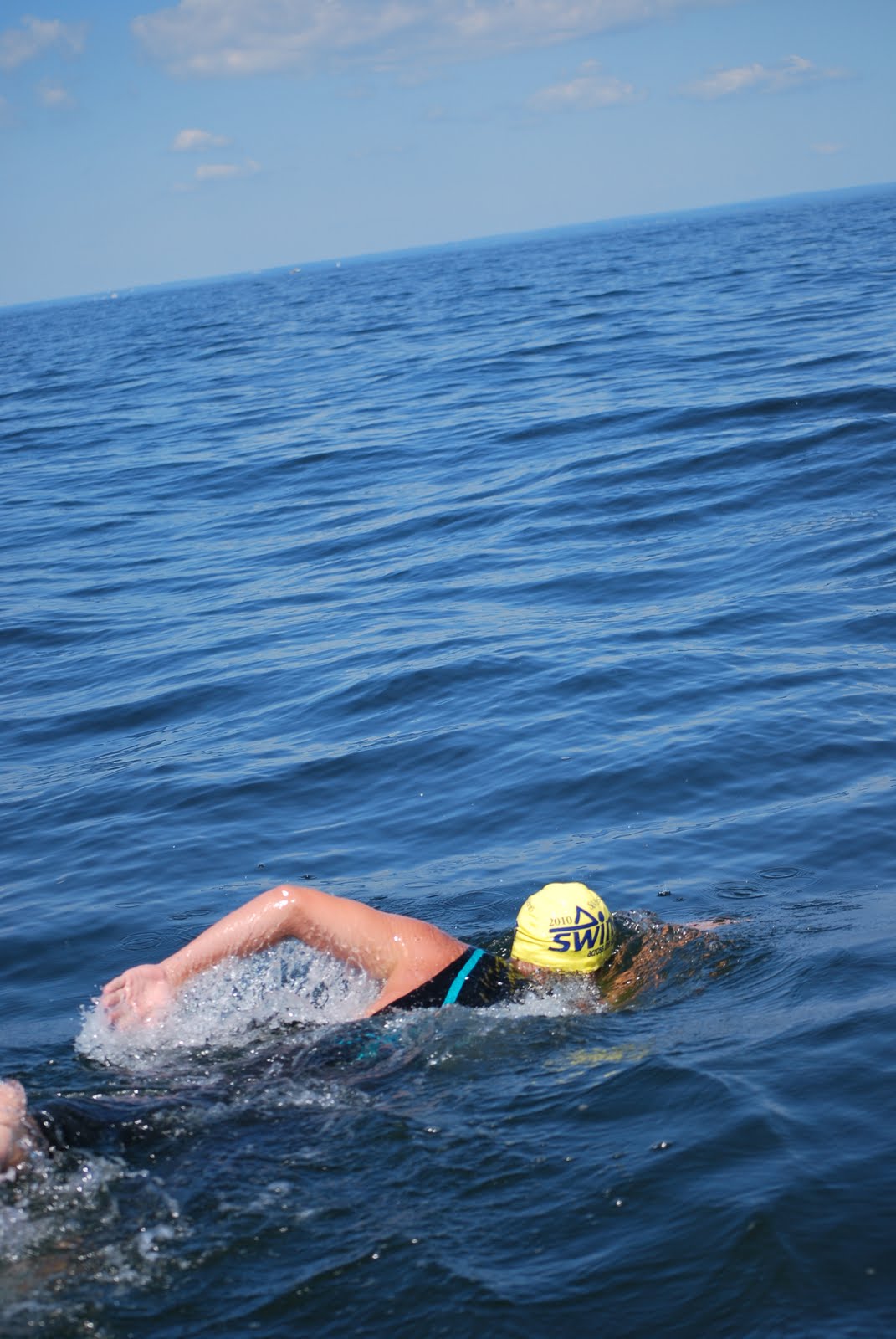
Last Saturday was the 23rd Annual Swim Across the Sound - and it literally took me this long to recover from the agonizing muscle pain and blog about it... (not really... I've just been cRaZy at work and not able to get online :-)
My team of 5 crossed the 16 mile (25 kilometer) stretch of water from Port Jefferson, NY to Bridgeport, CT in 8 hours, 24 minutes and 53 seconds.
We finished 5th in University Challenge, and 21st overall (in a field of 45 or 48). More excitingly, I survived, despite NO training WHATSOEVER in the last few months, and avoided uncomfortable encounters with marine life!
Apparently I swam right next to a whopper of a jellyfish, but didn't see any while in the water. From the safety of the boat, I saw several - they tend to clump together in little patches. One large colony in particular was sort of trapped in this lovely seaweed/lobster trap/trash swirl out in the middle of nowhere. One of the guys on our team swam STRAIGHT through it (thankfully, he was fast so the pain was brief!!) After that, we told him to swim directly behind the boat (most people like to swim slightly to the side) to avoid swimming through stagnant clumps of seaweed/trash/jellies and whatever else was floating around.
I think its the mental fear that's exponentially worse than the sting. I told everyone NOT to warn me about impending jellies unless they were absolutely enormous (like, bigger than me) or had a little sign on them saying "Adrien or Bust". I would rather just swim on/over/through them and have the whole process done and gone by the time I feel the sting. Knowing and projecting something slimy and painful in the water in front of you is a panic attack waiting to happen. That being said, I swam behind the boat and avoided whatever was waiting for me out there.
I spent most of the summer thus far working or traveling (and subsequently working too) and NOT in the water. So my contribution to the 5 person relay across the 16 mile stretch was minimal. But I certainly enjoyed the process immensely. This was my 3rd crossing of the Sound with the Swim Across the Sound relay, and by far the most fun and exciting. I was recruited at the last minute for a University of Connecticut student/alumni team for the 1st (of which I hope there will be more!!) SAS University Challenge. There were I think 7 or 8 university teams: Several from Fairfield U - student varsity and alum (and Fairfield Prep, which really shouldn't count, since they are technically still in high school, even if it's right next door to the university), Dartmouth alum "and friends" (which was a kick ass team, since they had 2 highly experienced marathon swimmers), Springfield U (several large, muscled guys who obviously swim very well).... And the best - UCONN!!
We had 2 alum (me and one woman who was also a professor at the medical school), 3 students (very fast swimmers - ah.... to be young(er) and in good shape!), and our boat captain and wife were ALSO alums!!! Our boat was decorated with UConn flags and banners, and everyone who passed by on the water (including several coast guards and police boats) cheered "UCONN! HUSKIES!" It was the first time I was psyched to be a Husky - and the first (unofficial) UCONN sporting event I was psyched to be at. Next year I hope to recruit another UCONN team, and we have already solicited the boat captain, his awesome wife and magnificent sail boat for University Challenge part 2.
Now, time to get back in the pool and train!!
Swimming Photos!!

Getting numbered on the ferry ride to Long Island

Just in case we forget the swimmer order...

all the swimmers getting off the ferry

Dresden and I tagging off for the first leg of the relay

All the boats behind us!!! Try and catch up suckers!! ;-)

Heading towards Connecticut...

Buoy 2A - 1 mile to go!!

go Team UCONN!
My team of 5 crossed the 16 mile (25 kilometer) stretch of water from Port Jefferson, NY to Bridgeport, CT in 8 hours, 24 minutes and 53 seconds.
We finished 5th in University Challenge, and 21st overall (in a field of 45 or 48). More excitingly, I survived, despite NO training WHATSOEVER in the last few months, and avoided uncomfortable encounters with marine life!
Apparently I swam right next to a whopper of a jellyfish, but didn't see any while in the water. From the safety of the boat, I saw several - they tend to clump together in little patches. One large colony in particular was sort of trapped in this lovely seaweed/lobster trap/trash swirl out in the middle of nowhere. One of the guys on our team swam STRAIGHT through it (thankfully, he was fast so the pain was brief!!) After that, we told him to swim directly behind the boat (most people like to swim slightly to the side) to avoid swimming through stagnant clumps of seaweed/trash/jellies and whatever else was floating around.
I think its the mental fear that's exponentially worse than the sting. I told everyone NOT to warn me about impending jellies unless they were absolutely enormous (like, bigger than me) or had a little sign on them saying "Adrien or Bust". I would rather just swim on/over/through them and have the whole process done and gone by the time I feel the sting. Knowing and projecting something slimy and painful in the water in front of you is a panic attack waiting to happen. That being said, I swam behind the boat and avoided whatever was waiting for me out there.
I spent most of the summer thus far working or traveling (and subsequently working too) and NOT in the water. So my contribution to the 5 person relay across the 16 mile stretch was minimal. But I certainly enjoyed the process immensely. This was my 3rd crossing of the Sound with the Swim Across the Sound relay, and by far the most fun and exciting. I was recruited at the last minute for a University of Connecticut student/alumni team for the 1st (of which I hope there will be more!!) SAS University Challenge. There were I think 7 or 8 university teams: Several from Fairfield U - student varsity and alum (and Fairfield Prep, which really shouldn't count, since they are technically still in high school, even if it's right next door to the university), Dartmouth alum "and friends" (which was a kick ass team, since they had 2 highly experienced marathon swimmers), Springfield U (several large, muscled guys who obviously swim very well).... And the best - UCONN!!
We had 2 alum (me and one woman who was also a professor at the medical school), 3 students (very fast swimmers - ah.... to be young(er) and in good shape!), and our boat captain and wife were ALSO alums!!! Our boat was decorated with UConn flags and banners, and everyone who passed by on the water (including several coast guards and police boats) cheered "UCONN! HUSKIES!" It was the first time I was psyched to be a Husky - and the first (unofficial) UCONN sporting event I was psyched to be at. Next year I hope to recruit another UCONN team, and we have already solicited the boat captain, his awesome wife and magnificent sail boat for University Challenge part 2.
Now, time to get back in the pool and train!!




August 5, 2010
Swimmer's Kryptonite
SO.... in a historic attempt to make this year one of the best years, I'm working on crossing off a few more items from my personal
"LIST OF S#*% I AM TERRIFIED OF DOING"
* Travel to a war-torn country and sleep through an earthquake - Done
* (Re)learn how to surf (or at least, not die on a surf board) - Done
* Handle a spider monkey - Done and done (scars to prove it)
* Re-apply to veterinary school - Should be writing that essay now.... ;)
* Learn how to drive a stick-shift car - Done
* Swim with a Cyanea capillata - working on it...........
WTF is a Cyanea capillata you ask??
Is it faster than a speeding bullet? ... Well, fast enough.
More powerful than a locomotive?? ... Maybe in groups
Able to leap tall buildings at a single bound? Not really...
So what is it that has almost 300 swimmers in a hot panic this weekend?

Meet Cyanea capillata - the Lion's Mane Jellyfish.
Or as it's referred to in the New England area "Oh f#%@"
This weekend marks the 23rd annual SWIM Across the Sound to benefit the St. Vincent's Cancer Center, and my 3rd year as a relay swimmer (working up to the solo swim... eventually...) More about the SWIM and St. Vincent's here
This Saturday I join a group of crazy people who will be up well before dawn and catch the 6am ferry boat from Bridgeport, CT to Port Jefferson, NY. We will then turn around and SWIM back - in my case, PART WAY back, since I will be sharing the 25 K (15 mile) swim distance with 5 other members of a relay team. That's still a lot of swimming, and according to the latest reports, it will be a lot of swimming in a sea of red lion's mane jellies.
Oh, by the way... did I mention that they sting??
"LIST OF S#*% I AM TERRIFIED OF DOING"
* Travel to a war-torn country and sleep through an earthquake - Done
* (Re)learn how to surf (or at least, not die on a surf board) - Done
* Handle a spider monkey - Done and done (scars to prove it)
* Re-apply to veterinary school - Should be writing that essay now.... ;)
* Learn how to drive a stick-shift car - Done
* Swim with a Cyanea capillata - working on it...........
WTF is a Cyanea capillata you ask??
Is it faster than a speeding bullet? ... Well, fast enough.
More powerful than a locomotive?? ... Maybe in groups
Able to leap tall buildings at a single bound? Not really...
So what is it that has almost 300 swimmers in a hot panic this weekend?

Meet Cyanea capillata - the Lion's Mane Jellyfish.
Or as it's referred to in the New England area "Oh f#%@"
This weekend marks the 23rd annual SWIM Across the Sound to benefit the St. Vincent's Cancer Center, and my 3rd year as a relay swimmer (working up to the solo swim... eventually...) More about the SWIM and St. Vincent's here
This Saturday I join a group of crazy people who will be up well before dawn and catch the 6am ferry boat from Bridgeport, CT to Port Jefferson, NY. We will then turn around and SWIM back - in my case, PART WAY back, since I will be sharing the 25 K (15 mile) swim distance with 5 other members of a relay team. That's still a lot of swimming, and according to the latest reports, it will be a lot of swimming in a sea of red lion's mane jellies.
Oh, by the way... did I mention that they sting??
July 15, 2010
Ecuador photos updated
Recent Ecuador photos can be found aqui:
http://picasaweb.google.com/adrienzap/ProteccionAnimalEcuadorIbarraEcuador#
http://picasaweb.google.com/adrienzap/ProteccionAnimalEcuadorIbarraEcuador#
July 13, 2010
3 weeks later...
3 weeks and 367 animals later (I think that's the final count... I lost track around 30 so I have to check my notes).... I am sitting in the Colombia airport at the same cafe I was at when I blogged 3 weeks ago - it seems like it was just yesterday, but at the same time, it also seems like it was lifetimes ago.
This has been an long 3 weeks filled with blood (lots of blood), sweat (mental as well as physical) and tears (and I'm sure a lot more are coming once I get home and internalize everything that happened). In the meantime, photos are being updated aqui:
www.picasaweb.google.com/adrienzap
This has been an long 3 weeks filled with blood (lots of blood), sweat (mental as well as physical) and tears (and I'm sure a lot more are coming once I get home and internalize everything that happened). In the meantime, photos are being updated aqui:
www.picasaweb.google.com/adrienzap
July 10, 2010
machismo es violencia
There is a billboard campaign in Ecuador promoting non-machismo male attitudes and anti-domestic violence. The slogan is "machismo es violencia" (Machismo is Violence) and there are catchy signs and billboards around Ibarra. Does it work? Probably not.
Today was mostly a good day in the clinic. Twelve surgeries (including 3 street dogs EL and I caught with a dart gun this morning) and an overall good, normal high-volume spay/neuter clinic feeling. Until the niños showed up.
One of the street dogs we caught (whom I nicknamed "Tank") was a big, 80+ pound Rottweiler mix that I darted as he was trying to rape a 20 pound female in heat. After surgery and recovery, we put him outside the clinic on a little abandoned side street, gave him an injection to reverse his sedation, pulled out his IV catheter and stood back. JS stood guard over him for a few hours to make sure he was OK, and after a snack of bread and cheese, we were happy to see him back on the street, minus 2 very large testicles!!
A few hours, JS and EL came into the clinic in a hot panic. A pack of children ran up to poor Tank (who was sleeping/passed out on the sidewalk) and attacked him with rocks. One fat little niño hit him square in the head and cut his ear open. Apparently JS and EL chased the little monsters, and the ring leader ran into a church. EL chased him inside and ripped him a new one, along with the pastor/church lady, who screamed at him for trying to hide out in a house of God.
Poor old Tank slept off the last bits of his anesthesia in the clinic bathroom, and we decided to keep him overnight. Considering what he had been through today, a nice shelter, pain medication and bread was the least we could do.
This was probably the most disturbing, depressing day of my entire time in Ecuador. Who the f$%& throws rocks at a sleeping, helpless dog? Seriously? I am speechless. What difference does all of this make if the children (not just the people, but the CHILDREN) have a f$%& it attitude towards animals and humanity. And you know what they say about children who are cruel towards animals, right?
Machismo es violencia. Too bad some of those machismos aren't even old enough to read.
Today was mostly a good day in the clinic. Twelve surgeries (including 3 street dogs EL and I caught with a dart gun this morning) and an overall good, normal high-volume spay/neuter clinic feeling. Until the niños showed up.
One of the street dogs we caught (whom I nicknamed "Tank") was a big, 80+ pound Rottweiler mix that I darted as he was trying to rape a 20 pound female in heat. After surgery and recovery, we put him outside the clinic on a little abandoned side street, gave him an injection to reverse his sedation, pulled out his IV catheter and stood back. JS stood guard over him for a few hours to make sure he was OK, and after a snack of bread and cheese, we were happy to see him back on the street, minus 2 very large testicles!!
A few hours, JS and EL came into the clinic in a hot panic. A pack of children ran up to poor Tank (who was sleeping/passed out on the sidewalk) and attacked him with rocks. One fat little niño hit him square in the head and cut his ear open. Apparently JS and EL chased the little monsters, and the ring leader ran into a church. EL chased him inside and ripped him a new one, along with the pastor/church lady, who screamed at him for trying to hide out in a house of God.
Poor old Tank slept off the last bits of his anesthesia in the clinic bathroom, and we decided to keep him overnight. Considering what he had been through today, a nice shelter, pain medication and bread was the least we could do.
This was probably the most disturbing, depressing day of my entire time in Ecuador. Who the f$%& throws rocks at a sleeping, helpless dog? Seriously? I am speechless. What difference does all of this make if the children (not just the people, but the CHILDREN) have a f$%& it attitude towards animals and humanity. And you know what they say about children who are cruel towards animals, right?
Machismo es violencia. Too bad some of those machismos aren't even old enough to read.
July 6, 2010
When bad things happen to good people....
... I get very upset.
I went to Ambato Sunday night to visit my friend DA and her family. It was (supposed) to be a much needed, animal-drama free 3 days of rest and fun before heading back to Ibarra for the last week of the PAE/WV clinic. But the universe saw fit to have otherwise.
My last night in Ambato was supposed to be spent at a nice little restaurant and any number of local bars or clubs - a girls' night out on the town. After finishing dinner and dessert, DA got a hysterical phone call from her sister (whom we JUST saw not even 30 minutes before). She returned home to find her dogs had been poisoned in her front yard. One dog was still alive, but had escaped during the chaos when the family got home, and was running/seizing/vomiting in the field next door. I have been blessed/cursed with the ability to maintain some control during emergencies (then I freak out afterwards), so I ran (high heels and all) to fish vomiting Osita out of a drainage ditch. I jumped into the back of DA's car and we rushed her to the local vet.
DA's whole family showed up at the vet's office; it was horrible to see them upset about the dead dogs and dying Osita. The story I got (via translation) was that someone threw a few dead chickens (packed with a variety of rat poisons) over the fence into their yard. The dogs ate the chickens (feathers and all) and Osita (being the largest of the dogs) was the one that survived long enough to get to the vet.
After waiting at the clinic for almost 2 hours, Osita was stable and we were told to come back in the morning. I haven't felt so powerless and hopeless in a long time. There was nothing I could do except sit and wait. If there are 2 things I'm NOT good at, it's sitting and waiting. I'm much more of a get-out-there-and-get-dirty kind of gal. It was horrible. The next morning was a relief when I heard Osita was fine (I think the vet was up all night with her) and her prognosis was good.
I wish I had more time to spend in Ambato, but it was hard to be there and not be in a position to help. DA's sister is probably the nicest woman in the world; why someone would poison her dogs is beyond comprehension (*side note* NA told me that when she lived in the Caribbean, people would poison the dogs a night or 2 before breaking into the house... again. Why?) I left Ambato this morning feeling sick and depressed (the sleepless night before didn't help) - my nice, relaxing vacation in Ambato turned into a melodramatic 72 hours, complete with a toxicologic emergency experience and a twisted ankle... In Quito now, and back to Ibarra tonight. What doesn't kill you, makes you stronger (and gives you nightmares and ulcers in the process...)
I went to Ambato Sunday night to visit my friend DA and her family. It was (supposed) to be a much needed, animal-drama free 3 days of rest and fun before heading back to Ibarra for the last week of the PAE/WV clinic. But the universe saw fit to have otherwise.
My last night in Ambato was supposed to be spent at a nice little restaurant and any number of local bars or clubs - a girls' night out on the town. After finishing dinner and dessert, DA got a hysterical phone call from her sister (whom we JUST saw not even 30 minutes before). She returned home to find her dogs had been poisoned in her front yard. One dog was still alive, but had escaped during the chaos when the family got home, and was running/seizing/vomiting in the field next door. I have been blessed/cursed with the ability to maintain some control during emergencies (then I freak out afterwards), so I ran (high heels and all) to fish vomiting Osita out of a drainage ditch. I jumped into the back of DA's car and we rushed her to the local vet.
DA's whole family showed up at the vet's office; it was horrible to see them upset about the dead dogs and dying Osita. The story I got (via translation) was that someone threw a few dead chickens (packed with a variety of rat poisons) over the fence into their yard. The dogs ate the chickens (feathers and all) and Osita (being the largest of the dogs) was the one that survived long enough to get to the vet.
After waiting at the clinic for almost 2 hours, Osita was stable and we were told to come back in the morning. I haven't felt so powerless and hopeless in a long time. There was nothing I could do except sit and wait. If there are 2 things I'm NOT good at, it's sitting and waiting. I'm much more of a get-out-there-and-get-dirty kind of gal. It was horrible. The next morning was a relief when I heard Osita was fine (I think the vet was up all night with her) and her prognosis was good.
I wish I had more time to spend in Ambato, but it was hard to be there and not be in a position to help. DA's sister is probably the nicest woman in the world; why someone would poison her dogs is beyond comprehension (*side note* NA told me that when she lived in the Caribbean, people would poison the dogs a night or 2 before breaking into the house... again. Why?) I left Ambato this morning feeling sick and depressed (the sleepless night before didn't help) - my nice, relaxing vacation in Ambato turned into a melodramatic 72 hours, complete with a toxicologic emergency experience and a twisted ankle... In Quito now, and back to Ibarra tonight. What doesn't kill you, makes you stronger (and gives you nightmares and ulcers in the process...)
July 2, 2010
Ehrlichia = 5.... Me = 0
There’s a reason I haven't updated my blog in almost a week.
Actually, there are several:
1) I’ve been exhausted every single night
2) I’ve been too depressed to take out my computer (or go to the Internet cafe)
3) I’ve been too busy having panic attacks and/or being generally agitated and/or impatient
We held surgery/clinic days on Sunday and Monday. Tuesday we were too depressed and drained to do surgery, so we traveled around Ibarra throwing ivermectin at random street dogs and visited the Mercado (market) to see the puppy/kitten booths. Wednesday we braved another day of surgery (very successfully) only to have a disaster later that night. Yesterday we slept in, did laundry, went to the internet, visited a local waterfall and made dinner at Gloria’s house (JA is an AMAZING cook!!)
I will spare the gory details, but let’s just say in almost 2 years of international veterinary clinics (including 3 previous clinics in Ecuador) I’ve never had such a frustrating, depressing, disheartening experience.
My new mantra/theme song for this trip:
I am powerless over Ehrlichia and any other bleeding disorder commonly seen in street dogs of Ibarra Ecuador.
Wish things were better here...
Actually, there are several:
1) I’ve been exhausted every single night
2) I’ve been too depressed to take out my computer (or go to the Internet cafe)
3) I’ve been too busy having panic attacks and/or being generally agitated and/or impatient
We held surgery/clinic days on Sunday and Monday. Tuesday we were too depressed and drained to do surgery, so we traveled around Ibarra throwing ivermectin at random street dogs and visited the Mercado (market) to see the puppy/kitten booths. Wednesday we braved another day of surgery (very successfully) only to have a disaster later that night. Yesterday we slept in, did laundry, went to the internet, visited a local waterfall and made dinner at Gloria’s house (JA is an AMAZING cook!!)
I will spare the gory details, but let’s just say in almost 2 years of international veterinary clinics (including 3 previous clinics in Ecuador) I’ve never had such a frustrating, depressing, disheartening experience.
My new mantra/theme song for this trip:
I am powerless over Ehrlichia and any other bleeding disorder commonly seen in street dogs of Ibarra Ecuador.
Wish things were better here...
June 26, 2010
La Esperanza
I arrived in Quito Thursday night and (finally!) met NA (the World Vets vet from Buffalo) and BL (the PAE Ibarra coordinatior). NA and I are staying at BL’s aunt’s farm in La Esperanza, a small town just outside Ibarra. I have an AWESOME room on the farm, and even though it’s about 40 degrees (F) out at night, I have a pile of super warm blankets and a nice cozy bed to snuggle in. Now I just wish my Hudson bullie was here with me!
We had a late night tea and cake with BL’s aunt Gloria and her 2 bestest friends, GA and LF. I was exaughsted from not sleeping on the plane (and referring back to a prior entry, there was a woman on the plane who was LITERALLY wearing a bra covered by a scarf. That was IT. Oh, well actually, she was wearing some flashy, “Hey-look-at-me-I’m-almost-naked” jewelry and Brittney-esque shades).
I slept like a baby, and woke up to see the farm in the daylight. Gloria’s neighbor puts her cows out to pasture in the back yard, so I was met with some friendly MOOS from the neighborhood vacas. Gloria has a handful of cats and dogs, all very fat and happy and excited to show me around the property.
Gloria is a very cool person – very ecologically minded with a humane spirit. She proudly showed me a dead scorpion she found in the driveway, and reiterated several times that he “died a natural death”. One of her dogs, Esperanza, was spayed by NA earlier (she’s been in Ibarra for a week already) and is now limping on her back leg in a very ACL-ish manner. Gloria claims she can massage it back to health, and I don’t know for sure if it was the massage or the Rimadyl, but Esperanza stopped limping for a few hours yesterday afternoon :)
NA and I hung out around the farm most of the morning, had breakfast with Gloria, went through our supplies and organized for the clinic. The newest dog on the farm is a cute little black dog named Nikki (after NA :)who is actually allowed in the house and hasn’t moved from the couch since I arrived. She just had an overall ADR look about her (Ain’t Doing Right) and has supposedly had intermittent vomit/diarheaa/anorexia/lethargy episodes since she arrived. She ran around the farm with me for a while, showing me the cow pasture and seemed overall AOK.
We were supposed to go salsa dancing in the afternoon, but BL never came to pick us up. Gloria took us out to lunch, after we re-checked a German shepard, Kaiser, who belongs to Gloria’s great-nephew or grandson. He was apparently showing signs of distemper (which I think is becoming the theme of the trip) and was doing better. We gave in another injection of vitamin B, which cures everything south of Mexico, then went to get ice cream/fruit salad in Ibarra. Yum!
BL was nowhere to be found, and we later found out that a friend of her’s was sick in the hospital. GA came to pick us up and took us to his house to make dinner! He is a really awesome guy, and I want to sneak him back to the States in my suitcase! He’s perfect – he cooks, cleans, drives us around, holds the door open – perfect! Except liking girls… *sigh*
BL came to his house and we had a DELICIOUS dinner, watched some crazy videos on YouTube, laughed, and after the dishes were cleaned and put away, we moved the kitchen table aside and GA and BL taught us how to salsa and meringue! We got back to the farm late and I passed out again (not as cold last night). This morning, NA and I were up and ready to go by 10am to the market in Otavalo.
But first, NA went running past my door with a stethoscope, then again with a thermometer – Nikki wasn’t doing well. Rapid, labored breathing, but no fever. Gloria was upset about a lot of things, and didn’t handle the dog situation well. She told us to just take her to the vet and get her out of the house. There were murmurings of distempter. We loaded her into GA’s car, and took her to the local vet. They have some sort of rapid test for distempter, which they did at the vet’s while GA and I went to the pharmacy to find IV lines and sterile water. When we got back, BL and NA were choaking back tears – Nikki tested positive for distempter.
Since she had been at Gloria’s house for 2 weeks, there was a pretty good chance she would recover from the distemper (as did Kaiser, who had the cornal edema signs of distemper and was now well into recovery). But, there was no room in any shelter or foster home for a possibly-infectious distemper dog, so she was euthanized. In the states, veterinarians are typically responsible for disposing of euthanized animals; in Ecuador, it is the owner’s responsibility. So we went to JA’s father’s house for shovels then off to a remote area to bury Nikki.
Everyone was pretty upset about the events of the morning, so we tried to make the best of the rest of the day. After lunch, we drove to a small town called Otavalo where there is a huge open market (an awesome place to barter for good deals on sweaters, jewelry and other handmade items). Then we drove to the next town over, Cotachachi, which is famous for leather crafts. JA drove us up the Cotachachi volcano to the lake at the top. We drove back to Ibarra just as the sun was setting and went to have parridilla (BBQ) for dinner – my new favorite food. The portions were HUGE, so NA and I saved our leftovers for catching street dogs. Surgery starts tomorrow! Wish us Buena suerte (good luck!)
We had a late night tea and cake with BL’s aunt Gloria and her 2 bestest friends, GA and LF. I was exaughsted from not sleeping on the plane (and referring back to a prior entry, there was a woman on the plane who was LITERALLY wearing a bra covered by a scarf. That was IT. Oh, well actually, she was wearing some flashy, “Hey-look-at-me-I’m-almost-naked” jewelry and Brittney-esque shades).
I slept like a baby, and woke up to see the farm in the daylight. Gloria’s neighbor puts her cows out to pasture in the back yard, so I was met with some friendly MOOS from the neighborhood vacas. Gloria has a handful of cats and dogs, all very fat and happy and excited to show me around the property.
Gloria is a very cool person – very ecologically minded with a humane spirit. She proudly showed me a dead scorpion she found in the driveway, and reiterated several times that he “died a natural death”. One of her dogs, Esperanza, was spayed by NA earlier (she’s been in Ibarra for a week already) and is now limping on her back leg in a very ACL-ish manner. Gloria claims she can massage it back to health, and I don’t know for sure if it was the massage or the Rimadyl, but Esperanza stopped limping for a few hours yesterday afternoon :)
NA and I hung out around the farm most of the morning, had breakfast with Gloria, went through our supplies and organized for the clinic. The newest dog on the farm is a cute little black dog named Nikki (after NA :)who is actually allowed in the house and hasn’t moved from the couch since I arrived. She just had an overall ADR look about her (Ain’t Doing Right) and has supposedly had intermittent vomit/diarheaa/anorexia/lethargy episodes since she arrived. She ran around the farm with me for a while, showing me the cow pasture and seemed overall AOK.
We were supposed to go salsa dancing in the afternoon, but BL never came to pick us up. Gloria took us out to lunch, after we re-checked a German shepard, Kaiser, who belongs to Gloria’s great-nephew or grandson. He was apparently showing signs of distemper (which I think is becoming the theme of the trip) and was doing better. We gave in another injection of vitamin B, which cures everything south of Mexico, then went to get ice cream/fruit salad in Ibarra. Yum!
BL was nowhere to be found, and we later found out that a friend of her’s was sick in the hospital. GA came to pick us up and took us to his house to make dinner! He is a really awesome guy, and I want to sneak him back to the States in my suitcase! He’s perfect – he cooks, cleans, drives us around, holds the door open – perfect! Except liking girls… *sigh*
BL came to his house and we had a DELICIOUS dinner, watched some crazy videos on YouTube, laughed, and after the dishes were cleaned and put away, we moved the kitchen table aside and GA and BL taught us how to salsa and meringue! We got back to the farm late and I passed out again (not as cold last night). This morning, NA and I were up and ready to go by 10am to the market in Otavalo.
But first, NA went running past my door with a stethoscope, then again with a thermometer – Nikki wasn’t doing well. Rapid, labored breathing, but no fever. Gloria was upset about a lot of things, and didn’t handle the dog situation well. She told us to just take her to the vet and get her out of the house. There were murmurings of distempter. We loaded her into GA’s car, and took her to the local vet. They have some sort of rapid test for distempter, which they did at the vet’s while GA and I went to the pharmacy to find IV lines and sterile water. When we got back, BL and NA were choaking back tears – Nikki tested positive for distempter.
Since she had been at Gloria’s house for 2 weeks, there was a pretty good chance she would recover from the distemper (as did Kaiser, who had the cornal edema signs of distemper and was now well into recovery). But, there was no room in any shelter or foster home for a possibly-infectious distemper dog, so she was euthanized. In the states, veterinarians are typically responsible for disposing of euthanized animals; in Ecuador, it is the owner’s responsibility. So we went to JA’s father’s house for shovels then off to a remote area to bury Nikki.
Everyone was pretty upset about the events of the morning, so we tried to make the best of the rest of the day. After lunch, we drove to a small town called Otavalo where there is a huge open market (an awesome place to barter for good deals on sweaters, jewelry and other handmade items). Then we drove to the next town over, Cotachachi, which is famous for leather crafts. JA drove us up the Cotachachi volcano to the lake at the top. We drove back to Ibarra just as the sun was setting and went to have parridilla (BBQ) for dinner – my new favorite food. The portions were HUGE, so NA and I saved our leftovers for catching street dogs. Surgery starts tomorrow! Wish us Buena suerte (good luck!)
Subscribe to:
Posts (Atom)
